Significant changes to labor migration and residence regulations will come into force on March 1, 2026. These amendments will directly affect both employers and foreign nationals, imposing additional legal and administrative responsibilities on businesses.
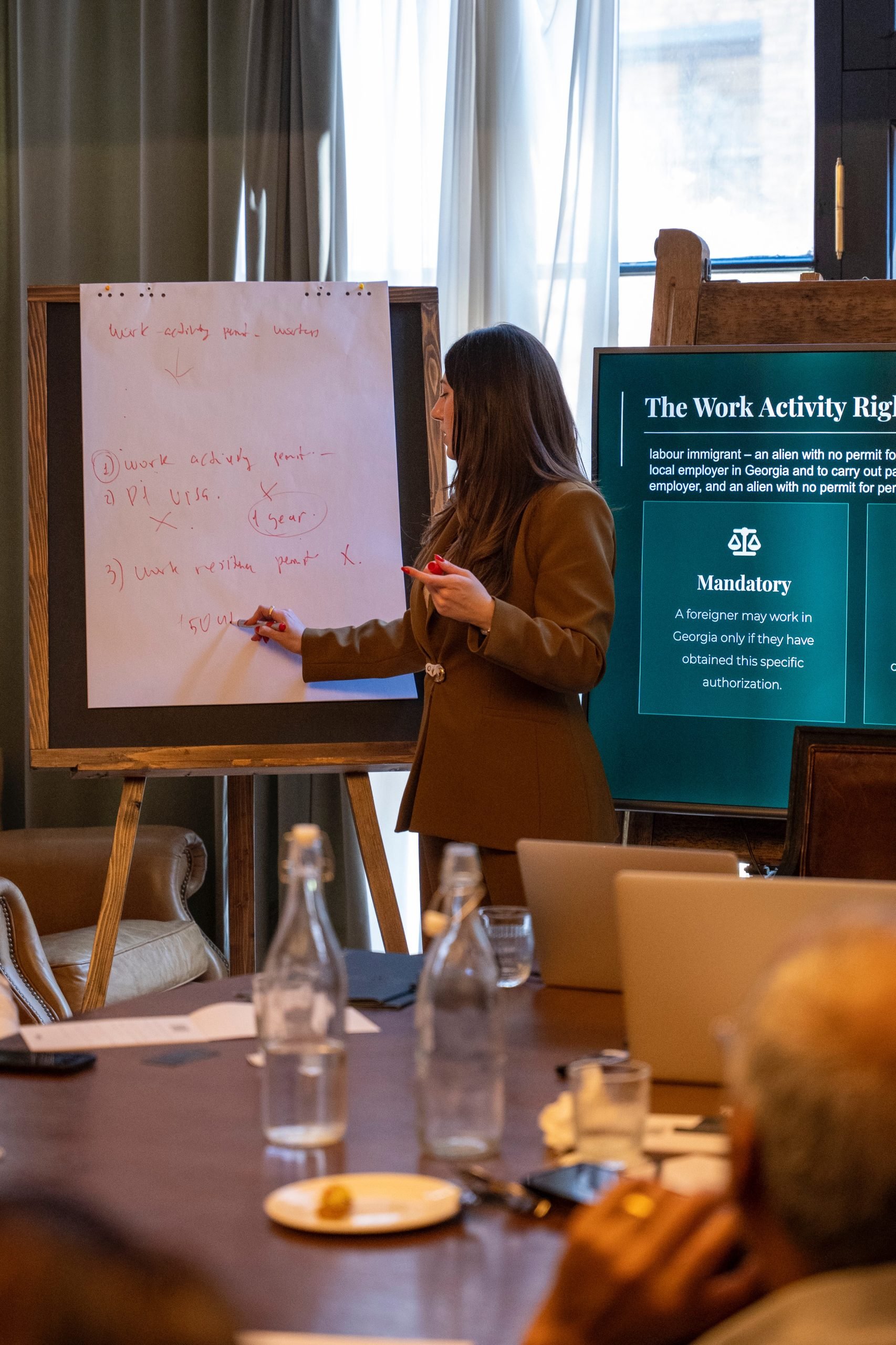
This important topic was the focus of a professional training organized by the Nomos Georgia Training Center on February 15, 2026. The purpose of the session was to provide participants with an in-depth and practice-oriented overview of the new legislative framework.
During the training, the following issues were discussed in detail:
-
The substance of the legislative amendments effective from March 1, 2026;
-
New administrative obligations for employers;
-
Updated procedures for the employment of foreign nationals, residence matters, and obtaining relevant permits;
-
Risks and sanctions associated with non-compliance;
-
Practical steps for managing business compliance.
The meeting went beyond a purely theoretical review — real case studies were examined together with participants, along with legal risk assessment mechanisms and strategic approaches to help companies prepare for the 2026 changes.
The Nomos Georgia Training Center places particular emphasis on the practical impact of regulations on business operations. Changes in the field of labor migration are not merely formal requirements — they directly affect a company’s operational processes, internal documentation, HR policies, reputation, and financial stability.
If it is important for you to ensure that legislative changes do not turn into unexpected legal challenges, follow our page — new trainings and topical legal issues will be announced soon, where we will once again discuss matters that are critically important for businesses in detail.